
Project RURBANISE: Bridging the Gap Between Rapid Urbanization and Climate Resilience

Updated: May 12
How Six Organizations Unite to Safeguard the Philippines’ Most Vulnerable Citizens
Urbanization is a double-edged sword. This is more than a statistic in the Philippine context; it is a daily reality for almost 25% of the population living in informal urban spaces.
Urbanization Defined
UNESCO (United Nations Educational, Scientific and Cultural Organization) defined urbanization as “the process by which an increasing proportion of a population moves from rural areas to urban centers, resulting in the growth of cities.”
If well-planned, urbanization can be a vehicle for economic growth and social transformation. The strategic clustering of labor, industry, and infrastructure within urban areas can promote cost efficiencies and fosters enterprise-level innovation. It can drive the transition from subsistence farming to a modern, industrial economy. Urbanization streamlines the provision of public utilities and infrastructure, which is often logistically challenging in scattered rural areas.
Conversely, rapid urbanization without strategic oversight creates systemic vulnerabilities, particularly in developing nations like the Philippines. The most visible manifestation of these risks is the proliferation of slums and informal settlements. The location of these settlements on high-risk 'marginal' lands, such as flood-prone areas and steep slopes, leaves residents dangerously unprotected during extreme weather events brought by climate change.
Vulnerabilities to climate change are compounded by urbanization effects such as inequality and poverty. This convergence creates 'differential vulnerability,' where marginalized communities disproportionately bear the severity of climate-related disasters.
Urbanization in the Philippines
Historically prone to typhoons, the Philippines confronts intensified climate risks where environmental hazards intersect with shifting urban landscapes. This exposure is exacerbated by deep-seated income inequality, leaving over 23 million people—nearly a quarter of the population—in poverty. As rapid urbanization continues, it yields complex 'rurban' (rural + urban) or ‘peri-urban’ areas marked by high population density but significant infrastructure gaps and limited market access. In such settings, typhoons trigger cascading failures across the unprepared, interconnected systems that support modern life.
While planning instruments for disaster response are established, risk reduction measures remain insufficient. Consequently, the most vulnerable populations continue to suffer disproportionate casualties and the loss of critical livelihoods. Most effective climate adaptation responses appear to be rooted in local knowledge, community solidarity and cooperation, However, there is a need to formally recognize and support locally-led adaptation for these efforts to enable vulnerable communities to withstand the intensifying scale of present and future climate risks.
Project RURBANISE
Project RURBANISE is a research initiative supported by the Climate Adaptation and Resilience (CLARE) program, a partnership between the UK’s Foreign, Commonwealth & Development Office (FCDO) and Canada’s International Development Research Centre (IDRC).
Consortium Partners:
Lead Organization: Technical Assistance Movement for People and Environment, Inc. (TAMPEI)
International Academic Partner: University of Sheffield’s Urban Institute
Community-Led Housing: Homeless People’s Federation Philippines, Inc. (HPFPI) via Philippine Action for Community-led Shelter Initiatives, Inc. (PACSII)
Environmental Research: Institute of Environmental Science for Social Change (ESSC)
Strategic Planning and Resilience:
University of Philippines Resilience Institute (UPRI) via University of the Philippines Public Administration Foundation, Inc. (UPPAF)
and the School of Urban and Regional Planning (SURP) via Planning and Development Research Foundation, Inc. (PLANADES).

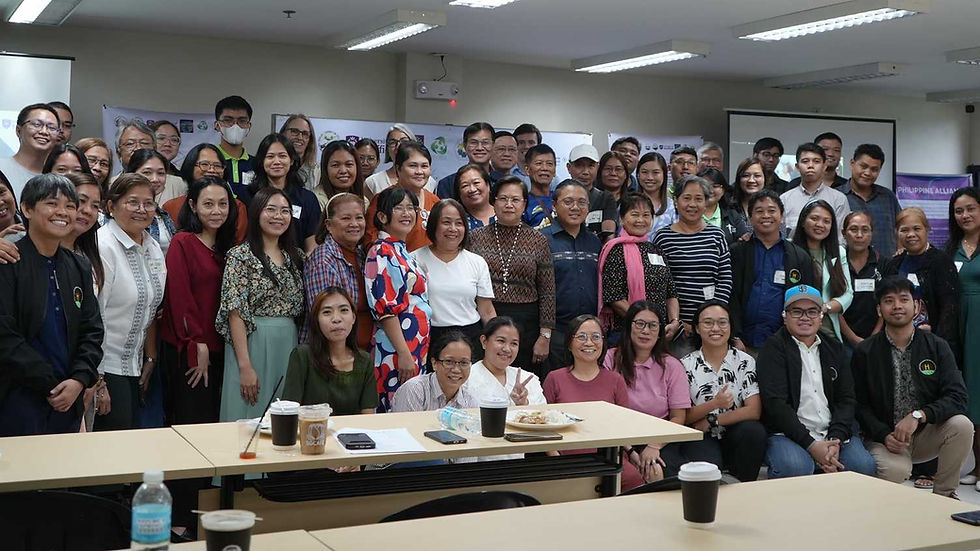
The RURBANISE project is a consortium of six multi-sectoral partners, each contributing unique expertise to a shared advocacy. This collective effort intends to strengthen effective responses for climate adaptation and resilience that acknowledge the life experiences and capacities of residents of informal settlements in the Philippines in a changing context of urbanization. Specifically, it aims to:
Analyze Vulnerability: Use technical tools and community participation to identify how and why different settlements face unique climate risks.
Develop Socially Inclusive Policy: Create scalable urban planning solutions that prioritize the needs of marginalized groups and enhance their resilience.
Drive Pro-Poor Innovations: Foster collaboration between residents, practitioners, and academics to develop and apply community-led climate adaptation strategies.
Support:
CLARE is a £110m, UK-Canada framework research programme on Climate Adaptation and Resilience, aiming to enable socially inclusive and sustainable action to build resilience to climate change and natural hazards. CLARE is an initiative jointly designed, funded and run by the UK Foreign Commonwealth and Development Office and Canada’s International Development Research Centre. CLARE is primarily funded by UK aid from the UK government, along with the International Development Research Centre, Canada.
Research supported by CLARE is bridging critical gaps between science and action: developing new tools and supporting partner governments, communities, and the private sector to use evidence and innovation to drive effective solutions to the climate challenge, whilst building capacity of both those carrying out the research and those using the resulting evidence.
Ultimately, the success of climate adaptation in the Philippines rests on the team's ability to integrate institutional planning with community cooperation. Project RURBANISE is a vital catalyst for this integration, systematically mapping vulnerabilities, advocating for inclusive policies, and piloting pro-poor innovations to alleviate this national socio-environmental crisis. By addressing the 'rurban' reality proactively, the consortium works to ensure that the double-edged sword of urbanization is harnessed to safeguard the country’s most vulnerable citizens.
Reference: UNESCO. (n.d.) Urbanization. Retrieved from https://www.unesco.org/en/query-list/u/urbanization#term-definition.

About the Author
Janina Salubo is a Knowledge Management and Development Communications Volunteer for the RURBANISE project, specializing in translating complex resilience research into accessible insights for funders and grassroots communities.