
Radical Honesty for Radical Growth: Inside the HPFPI Organizational Assessment

Grassroot federations become so consumed by immediate fieldwork that they lose the space to pause and reflect. Between balancing urgent project deadlines, managing community relationships, and advocating for vulnerable rurban residents, the pace is relentless. Yet, true long-term impact and climate resilience demands to look beyond daily project management, and focus on building a robust, self-sustaining organizational foundation.
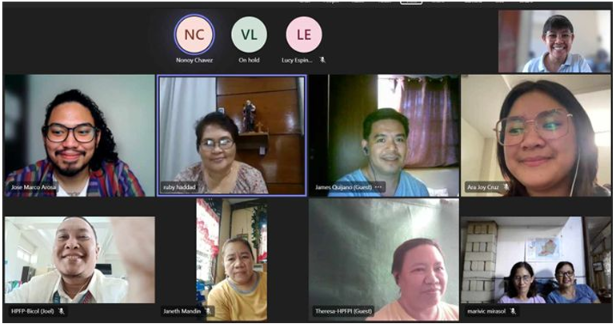
From November 2023 to March 2024, the Homeless Peoples Federation Philippines Inc. (HPFPI), in collaboration with TAMPEI and graduate students from the University of the Philippines College of Social Work and Community Development, intentionally took a step backward in order to look inward. Through a comprehensive Organizational Assessment (OA), leaders and partners engaged in a deep diagnostic process to evaluate the capacity of the federation in effectively and efficiently fulfilling its mission and vision, and delivering impacts to the grassroot communities it works with under the umbrella of Project RURBANISE.
The core focus of the assessment was to identify key areas for growth across four critical pillars: internal operations, resource management, community engagement, and external advocacy.
The Framework
The organizational assessment began with structured consultations and a collaborative SWOT analysis, which ultimately revealed six core priority areas. These dimensions formed the basis for both online and in-person self-guided reflections among the organization’s leadership:
Operationalization of Vision and Mission
Resource Management and Funding
Training and Capacity Development
Leadership and Organizational Development
Project Implementation and Community Engagement; and
Policy and Advocacy Efforts

To understand this framework better, we adapted the Inter-American Development Bank (IDB) evaluation framework.
Click to expand: The Four Dimensions of Organizational Growth
This model measures health across four interconnected dimensions:
Organizational Performance: This pertains to balancing meeting goals (effectiveness), maximizing resources (efficiency), and maintaining long-term significance to stakeholders (relevance). In the context of Project RURBANISE, it relates to the implementation of the project and the organization’s engagement with the communities.
Organizational Capacity: Defined as “the ability of an organization to use its resources to perform”. This dimension looks directly at the internal machinery of the federation: optimizing assets to sustain operations (resource management and funding), empowering human capital through localized skills upgrading (training and capacity development), and defining institutional niche while strengthening internal governance frameworks (leadership and organizational development).
Organizational Motivation: This dimension represents the "personality" and inner drive of the group, exploring how effectively the organization translates its mission and vision into its operations.
External Environment: Organizations are open systems that are heavily impacted by the outside environment. Policy and advocacy efforts represent an organization's proactive mechanisms for driving systemic change; however, the external environment establishes the parameters and conditions under which these initiatives operate. It requires the analysis of the political, economic, and environmental landscape to avigate barriers and seize strategic opportunities.
The Methodology
To ensure the assessment was both systematic and deeply rooted in the community, the assessment methodology followed a structured, four-part process. The workflow was initiated with the formulation of specific objectives, questions, and indicators to establish a precise diagnostic baseline. From there, the team focused on the validation of initial data to ensure our historical insights were accurate. This directly informed the development of tools tailored for dual online and in-person use, which allowed the team to perform extensive stakeholder mapping to mobilize key network leaders. Data gathering was brought to life during an immersive Organizational Assessment Workshop, utilizing Guided Self-Assessment frameworks like the Hexagon Tool, surveys, and questionnaires. The process culminated in the presentation and validation of results, where all analyzed findings were returned to HPFPI for collective refinement and final verification.

The Realization
True institutional growth requires radical honesty. While the assessment faced constraints, including a short period of reflection and limited feedback from the wider membership to balance leaders' perspectives, the insights generated were profoundly illuminating. In fact, when participants initially felt intimidated by the data-gathering tools, facilitators and internal change agents—like the outgoing national president—stepped in to clarify the value of the process and build confidence. Furthermore, to proactively address administrative concerns regarding survey fatigue following a recent strategic planning cycle, the team created a win-win scenario by thoroughly reviewing and integrating existing institutional documents directly into the assessment design. The team overcame potential logistical barriers by maintaining rigorous remote and virtual coordination, successfully ensuring that an extensive list of key stakeholders could meaningfully participate in the process and help map out the federation's future.
Notably, a critical observation from a Cebu-based participant highlighted a systemic challenge that resonates across the broader development sector: a tendency for HPFPI and its partner NGOs to become increasingly project-centric in recent years. Consequently, vital institutional advancement initiatives such as capacity development, leadership cultivation and movement-building, have deferred critical resources and strategic focus.

A resilient organization leverages its assessment data to drive continuous improvement. Following the collaborative data analysis, validated findings were presented and discussed.
Awareness to Alignment
The assessment workshop confirmed an encouraging baseline: the federation has been moderately successful in its operationalization of vision and mission, championed by dedicated leaders. To take this accomplishment to the next level, the room for growth is in actively designing unified, systematic communication strategies to eliminate regional gaps and ensure that the members align with the organization’s core values and objectives.
Actionable Insights |
Refine strategic planning frameworks to guarantee tight alignment with HPFPI’s core mission of supporting low-income settlements and securing housing and livelihood security. |
Enhance team engagement and support mechanisms to more effectively internalize and operationalize HPFPI's mission in community organizing and savings mobilization. |
Partnerships and Project Success
While the project implementation and community engagement are moderately successful, the validation data provides a clear roadmap for optimization. The team recognizes that project outcomes often fluctuate based on varying levels of local involvement and the structure of planning and budgeting. Moving forward, the key to sustainable growth lies in leveraging the strong external collaborations while carefully balancing diverse community expectations. Ultimately, reinforcing the project management methodologies and cultivating deeper local engagement will significantly strengthen this core pillar.
Actionable Insights |
Strengthen financial management and transparency, a step vital for HPFPI's active engagement with government and partner institutions, funding diversification, and long-term sustainability. |
Maintain continuous capacity-strengthening initiatives for HOAs, focusing on leadership development through workshops that deepen members' understanding of their distinct roles and functions. |
Ensure clear communication regarding interventions directed at HOAs, explicitly accounting for varying local characteristics (e.g., distinguishing between highly vocal HOAs and those requiring more proactive outreach). |
Streamline capacity-building efforts to focus directly and intentionally on the independent execution capacities of individual HOAs. |
Advocacy and Alliances
The federation’s policy and advocacy efforts are currently moderately successful, highlighting distinct opportunities for optimization through structured training and communication. To optimize this pillar, there must be a focus on effective policy execution alongside a unified understanding of core advocacy objectives. Strengthening strategic alliances with external partners and maintaining a community-centric approach will ultimately amplify the grassroots impact of these initiatives.
Actionable Insights |
Foster an organizational culture rooted in open communication and high adaptability to changing political and environmental contexts, directly enhancing advocacy efforts for informal urban settlers. |
Intensify rights awareness among urban poor communities and localize actions regarding policy advocacy and stakeholder engagements. |
Formulate personalized development plans for members, emphasizing leadership skills adaptable to internal and external shifts, community-led processes, crisis management, and policy advocacy. |
Stewardship and Shared Resources
The feedback regarding resource management and funding offers a brilliant blueprint for the future of the federation. The team shifts its focus toward deep-rooted financial sustainability by investing heavily in community-level literacy and training. While securing consistent funding remains an active challenge for the organization, implementing a highly systematic approach to financial management will ensure the long-term viability of our projects. The federation is also renewing its commitment to proportional resource allocation, reaching well beyond major administrative hubs to vitalize the projects of our most far-flung regional communities.
Actionable Insights |
Develop a comprehensive resource management strategy that aligns explicitly with community savings and financial capacities, prioritizing sustainability and equitable regional distribution. |
Localize savings frameworks and connect them directly to community livelihood programs by adopting best practices from veteran implementers, setting clear policies, and ensuring absolute accountability. |
Equipping Every Community
Empowering the members through continuous learning is a core priority. While balancing funding constraints has historically made it challenging to deliver regular programs at the local community level, this is viewed as an invitation to innovate. The validated results of the assessment recognize the significance of inclusive training and capacity development, designed to reach a much broader spectrum of our membership. The goal is to foster a culture of seamless knowledge transfer, ensuring that the insights, skills, and expertise held by our leadership flow dynamically to the wider community.
Actionable Insights |
Implement a structured training program organization-wide, targeting both leadership and technical skills development to dramatically enhance community mobilization and settlement profiling efforts. |
Develop inclusive training programs focused heavily on project implementation skills and basic financial literacy tailored for community-based organizations and local savings groups. |
Build a sustainable, structured approach to knowledge transfer to effectively prepare the next generation of community leaders. |
Roll out comprehensive leadership and skills training that is fully accessible to all general assembly members, anchoring the curriculum in core focus areas like financial literacy, project management, and community engagement. |
Promote an adaptive learning ecosystem to help communities navigate shifting environments, keeping disaster risk reduction and community-led management at the center of our efforts. |
Democratize educational opportunities by focusing trainings on the entire general assembly membership, deliberately moving away from limiting learning access to officers only. |
Cluster organizational capacity building into two intentional streams: 1) focusing on the internal operational capacity of HPFPI, and 2) focusing directly on the independent execution capacity of the individual HOAs. |
Learning to Lead with Limited Time
The assessment provided a clear diagnostic of a need for a more consistent and structured leadership and organizational development. The voluntary framework of these leadership positions underscores the essential need for strong time management and deep personal commitment to navigate the role's unique demands. Organizational performance is fundamentally enhanced when consistent internal communication is matched with a highly proactive leadership methodology.
Actionable Insights |
Prioritize decentralizing authority, actively capacitating emerging grassroots leaders, and creating clear career progression plans. Doing so is essential for strengthening local organizations and amplifying the impact of HPFPI’s community mobilization and savings programs. |
Explore the development of objective criteria for leadership selection, balancing the existing cultural tendency to choose leaders based on popularity and existing social networks. |
Establish thematic, sustainable, and highly programmatic leadership training that moves away from ad-hoc workshops. |
Reinforce the baseline mindset that HPFPI’s foundational approach is deeply collective, ensuring that staff and volunteers remain active and intact even after their official terms of office expire. |
The Blueprint
The success of the organizational assessment was driven by the organization’s profound openness and willingness to confront difficult, vital questions during a critical period of institutional transition. Driven by internal change agents who championed continuous improvement across all operational facets, this reflective process inspired key stakeholders to share their uninhibited thoughts and honest sentiments. The results from the organizational assessment are the basis for further development interventions, and an aid to the review of HPFI’s strategic plan. As the federation navigates a shift from legacy leadership to a new generation of organizers, this timely assessment has provided an invaluable, structured blueprint to guide and empower incoming leaders.
—
Through long-term commitments and partnerships worldwide, and needs-driven, action-focused research, CLARE links up short-and long-term issues, enabling long-term, sustainable, and fair economic and social development in a changing climate whilst supporting early action to reduce impacts of climate variability whilst providing a better understanding of the risks associated with climate.
Reference:
Lusthaus, C., Adrien, M.-H., Anderson, G., Carden, F., & Montalván, G. P. (2002). Organizational assessment: A framework for improving performance. Inter-American Development Bank; International Development Research Centre. https://idrc-crdi.ca/en/books/organizational-assessment-framework-improving-performance

About the Author
Janina Salubo is a Knowledge Management and Development Communications Volunteer for the RURBANISE project, specializing in translating complex resilience research into accessible insights for funders and grassroots communities.